The products of visual facilitation and graphic recording might look similar: big paper charts covered with words and pictures. But the PROCESS and PURPOSE of the two is fundamentally different. If you don’t know the difference, you might be disappointed with what you get.
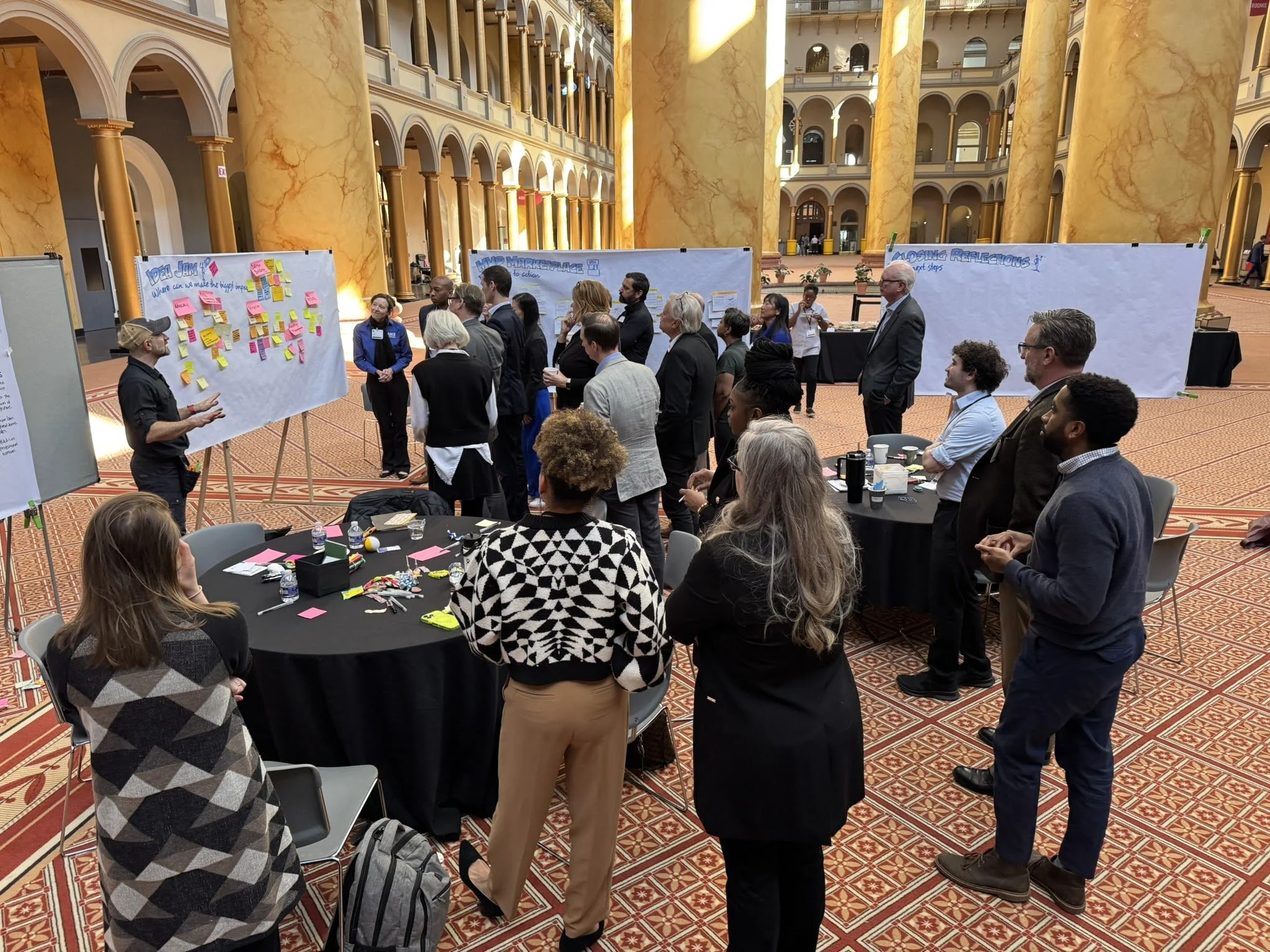
Brian Tarallo visual facilitation
When to use visual facilitation
If your PURPOSE of the meeting is to engage participants in a collaborative discussion, you should choose visual facilitation. That collaborative PURPOSE could be a decision-making process, a facilitated reflection, a design thinking workshop, a strategic plan, or any group discussion where you want to hear and actively engage the voices of the participants.
The PROCESS of visual facilitation involves understanding what you want to achieve at the end of the day, what you know about the participants and the room itself, and HOW the decision will be made. It involves a skillful facilitator presenting you with options for activities and methods that will ultimately become the agenda and outputs for the meeting. A collaborative process requires a collaborative design between you and the facilitator.
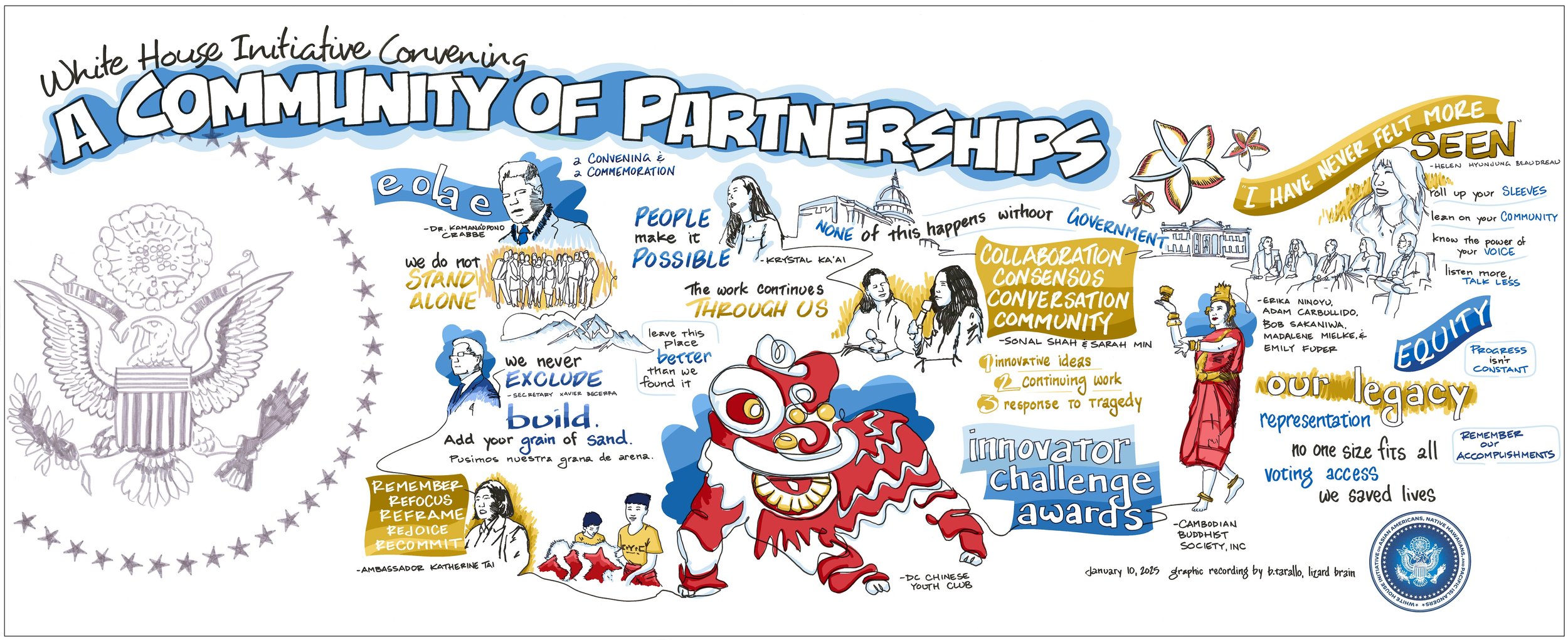
Graphic Recording by Brian Tarallo, Managing Director of Lizard Brain
When to use graphic recording
If your PURPOSE of the meeting is to inform participants and encourage listening and retention, you should choose graphic recording. That receptive PURPOSE could be a keynote address, a panel discussion, a lecture or training, or any presentation where you want participants to listen and receive information.
The PROCESS for graphic recording involves understanding of the agenda, what’s being presented when and for how long, and ultimately what to listen for and what’s most important to capture. We like to know if there are any key visuals or ideas that should receive special attention, like speaker portraits or central images.
Not sure which you want? Let’s talk. No sales pitch, no charge. https://calendly.com/brian-lizardbrain/45-min-discovery-call