From Shazam to Sharpies: What Comic Books Can Teach You About Graphic Recording
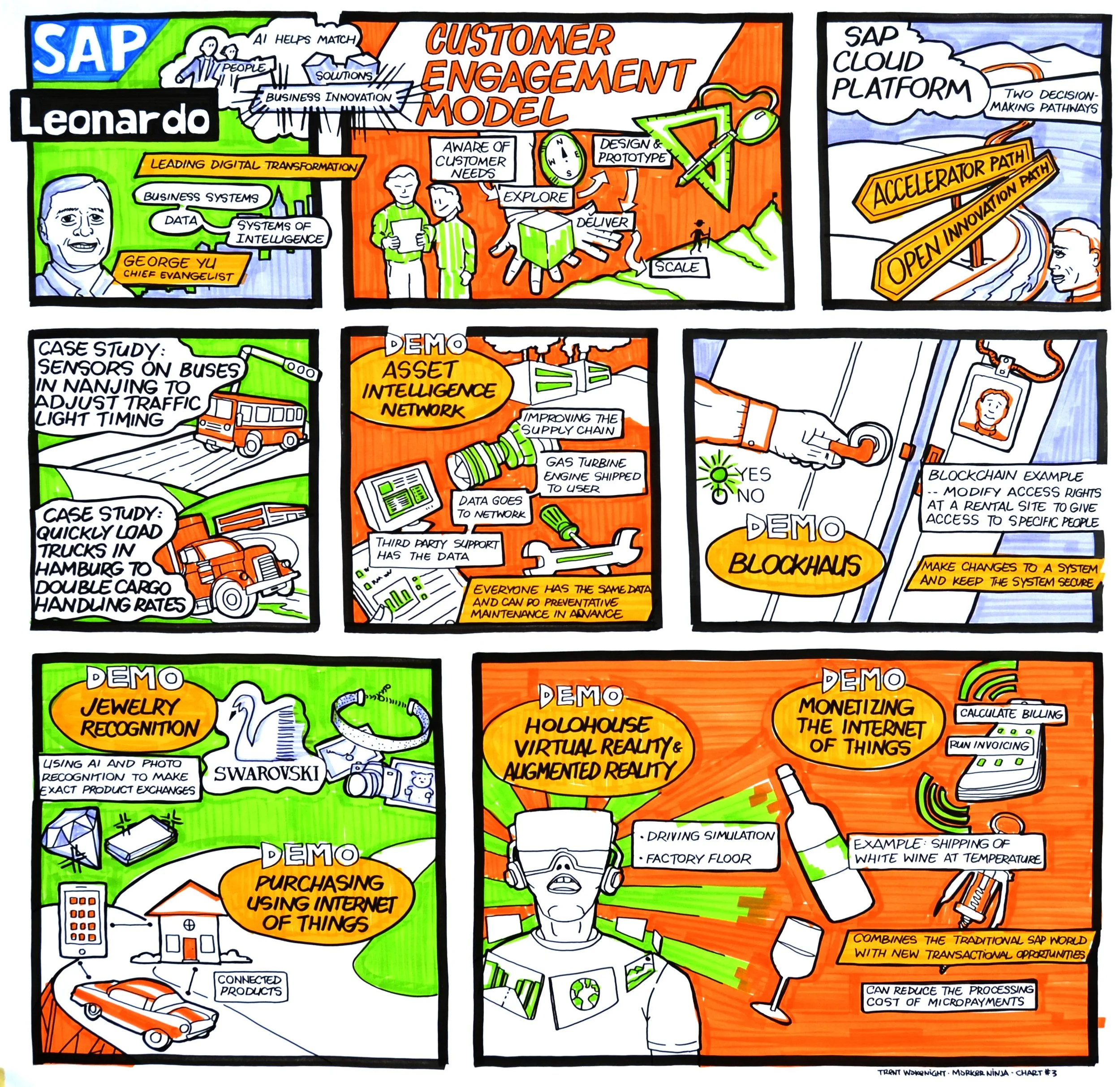
Created by Trent Wakenight
If you’ve ever watched a good comic book artist at work, you know this: they’re doing in 22 pages what graphic recorders do on 4 feet of foam board.
In the NOVA Scribes session “Shazam! Comic Book Graphic Recording” with “Marker Ninja” Trent Wakenight, the focus is simple: if you want to level up your graphic recording, steal from the masters: comic book artists.
Link to the NOVA Scribes Workshop: Shazam! Comic Book Graphic Recording
Trent teaches us how comics organize information, guide attention, and create emotion on a static page… which is exactly your job when you’re standing at the wall with a marker.
Here’s a summary of how Trent’s comic book thinking can transform your next live recording.
1. Panels: Give Ideas a Clear Home
Comic artists don’t dump everything into one undifferentiated page. They use panels as discrete frames to:
Group related ideas
Control pacing
Make the story readable at a glance
In graphic recording, panels can be:
Boxes around key topics
Columns for phases of a process
Clusters for different speakers or themes
Try this next session:
Before the meeting starts, lightly pencil 3–5 big “panels”: e.g., Context, Insights, Decisions, Next Steps.
As people talk, drop content into a specific panel instead of freestyling all over the page.
You’ll end with a chart that feels less like a brain dump and more like… well, a comic page: more readable and structured.
2. Flow: Draw the Eye Like a Story, Not a Spreadsheet
Great comic pages have a deliberate reading path. The artist is constantly asking: Where does the eye go next? Graphic recorders need the same discipline. If the viewer has to work hard to figure out how to read a chart, you’ve already lost them.
Borrow these comic tools:
Strong titles at the top as your “page headline”
Obvious entry point: a big image, bold word, or central icon
Arrows and connectors that guide people left-to-right or top-to-bottom
Varying sizes: big for main ideas, small for supporting details
Ask yourself while you draw:
“If someone walks into the room late, can they tell where to start in three seconds?” If the answer is no, you don’t have a visual story yet—you’ve got a visual transcript.
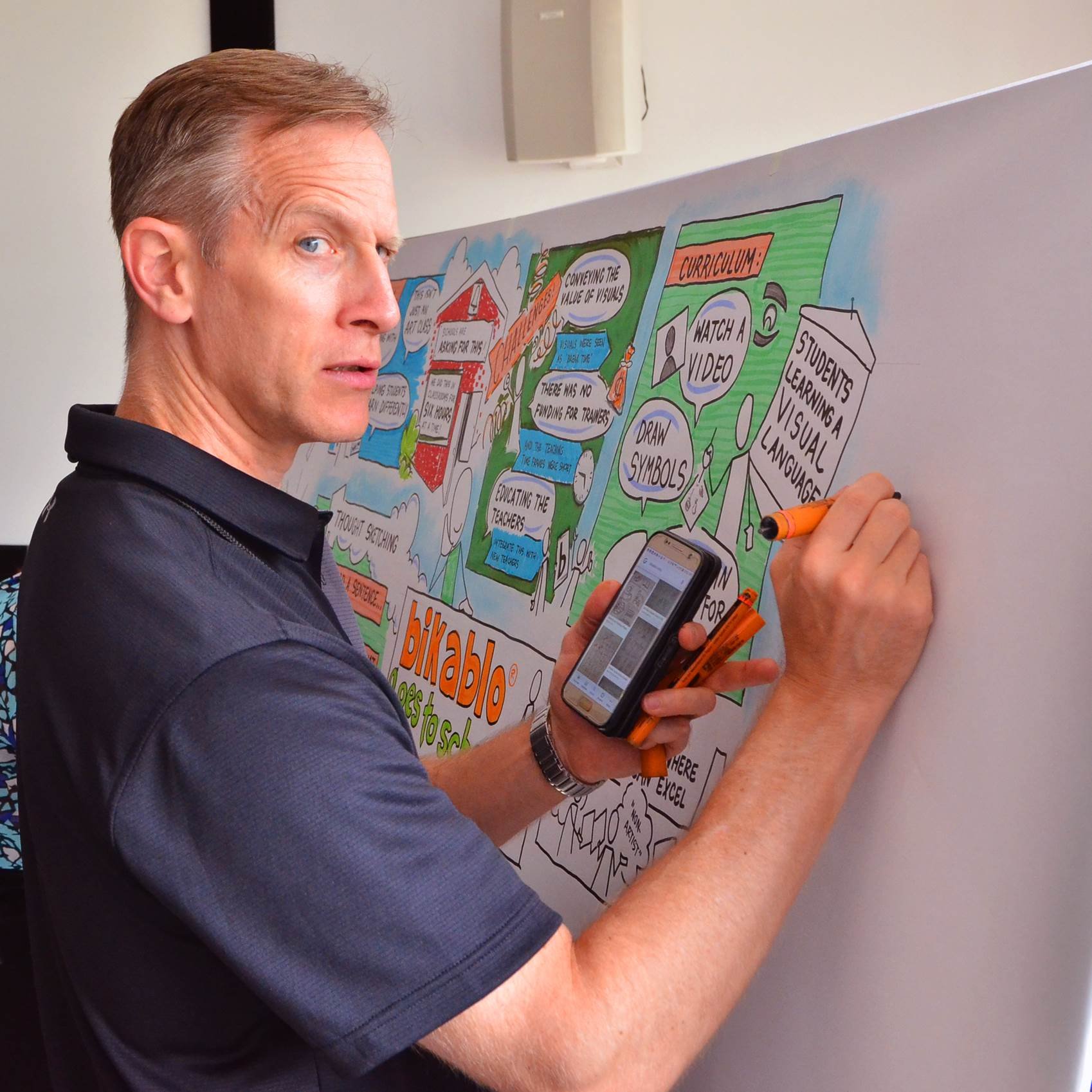
Trent Wakenight of Marker Ninja
3. Sound Effects, Lettering, and Visual Emphasis
Comics are loud, even on silent paper.
BOOM! WHAM! KRAK!
Think Adam West’s Batman. It’s not subtle. It’s not meant to be.
As a graphic recorder, you can’t add literal sound, but you can borrow that energy:
Use bold, chunky lettering for key decisions and commitments
Add simple icons to emphasize: lightbulb (idea), exclamation mark (risk), star (priority)
Use visual “SFX” like bursts, banners, and underlines around the big takeaways
You’re not decorating; you’re signaling: “Hey, this part matters. Look here.”
Done well, your page will tell people what’s important without them reading every word.
4. Characters: Make the Work Less Abstract
Comic storytellers know that you care more about people than concepts. Graphic recording is no different.
Most meetings overload on nouns like “stakeholders,” “alignment,” and “strategic priorities.” None of those have faces.
Borrow from comics by introducing:
Simple characters to represent teams (IT, leadership, customers)
Small faces or figures next to quotes or key perspectives
Emotion cues (a worried face near a risk, a confident stance near a decision)
This doesn’t have to be detailed. Two dots and a line is a face. The point is to:
Invite empathy
Show that real humans are affected
Make abstract strategy feel grounded
When people can see themselves in the chart, they pay attention differently.
5. Pacing and “Beats” on the Page
In comics, every panel is a beat: a moment in time.
Big climactic panels = big story turns
Small narrow panels = quick actions, transitions, or asides
Graphic recording can use similar pacing:
Give more real estate to turning points: decisions, tensions resolved, priorities chosen
Use smaller side panels or clusters for edge cases, parking lot items, or “nice to know” content
A good test:
If everything is the same size, you’re not pacing—you’re flattening.
Let the page breathe where the conversation breathes. Make the big moments big.
6. Color as a Storytelling Tool, Not Decoration
Comic colorists don’t choose colors at random; they’re setting mood and focus.
In graphic recording:
Use one base color for most text
Use one accent color for priorities, decisions, and deadlines
Use another accent for risks, blockers, or tensions
You don’t need a full rainbow. In fact, too many colors = visual noise.
Think like a colorist:
“What’s the emotional temperature here?”
“What deserves a color highlight versus staying in the background?”
Your future self (and your client) will thank you when they can read the page fast.
7. Study Comics Like You Study Facilitation
If you want to get better at graphic recording, don’t just look at other graphic recorders. Look at:
Comic book pages
Graphic novels
Webcomics and strips
Ask yourself:
How are they grouping information?
How do they show emotion or tension without a paragraph of explanation?
How do they lead your eye even if you don’t read the text?
Then practice:
Take a favorite comic page and redraw it as a meeting capture
Take a real meeting you’ve recorded and reimagine it as a comic page layout
The skills transfer cleanly. You’re still telling a story with boxes, lines, and ink.
8. Why This Matters Beyond the Wall
Good graphic recording isn’t wall art. It’s a visual operating system for the group:
What did we just decide?
Who’s doing what?
How does this all fit together?
Comic book thinking helps you build artifacts that people actually use:
Leaders can brief others quickly with one page
Teams can see themselves in the story of the work
Complex conversations become memorable, not just documented
That’s the whole game.
If you’re a facilitator, visual practitioner, or just the bravest person with markers in your organization, studying comic books is not indulgent. It’s professional development.
You’re not trying to turn your meeting into Shazam! You’re trying to turn your chart into something people actually want to look at, and can understand in one glance.
That’s what the best comic artists do every day. Time for us to catch up.