Why stickers lead to better decisions
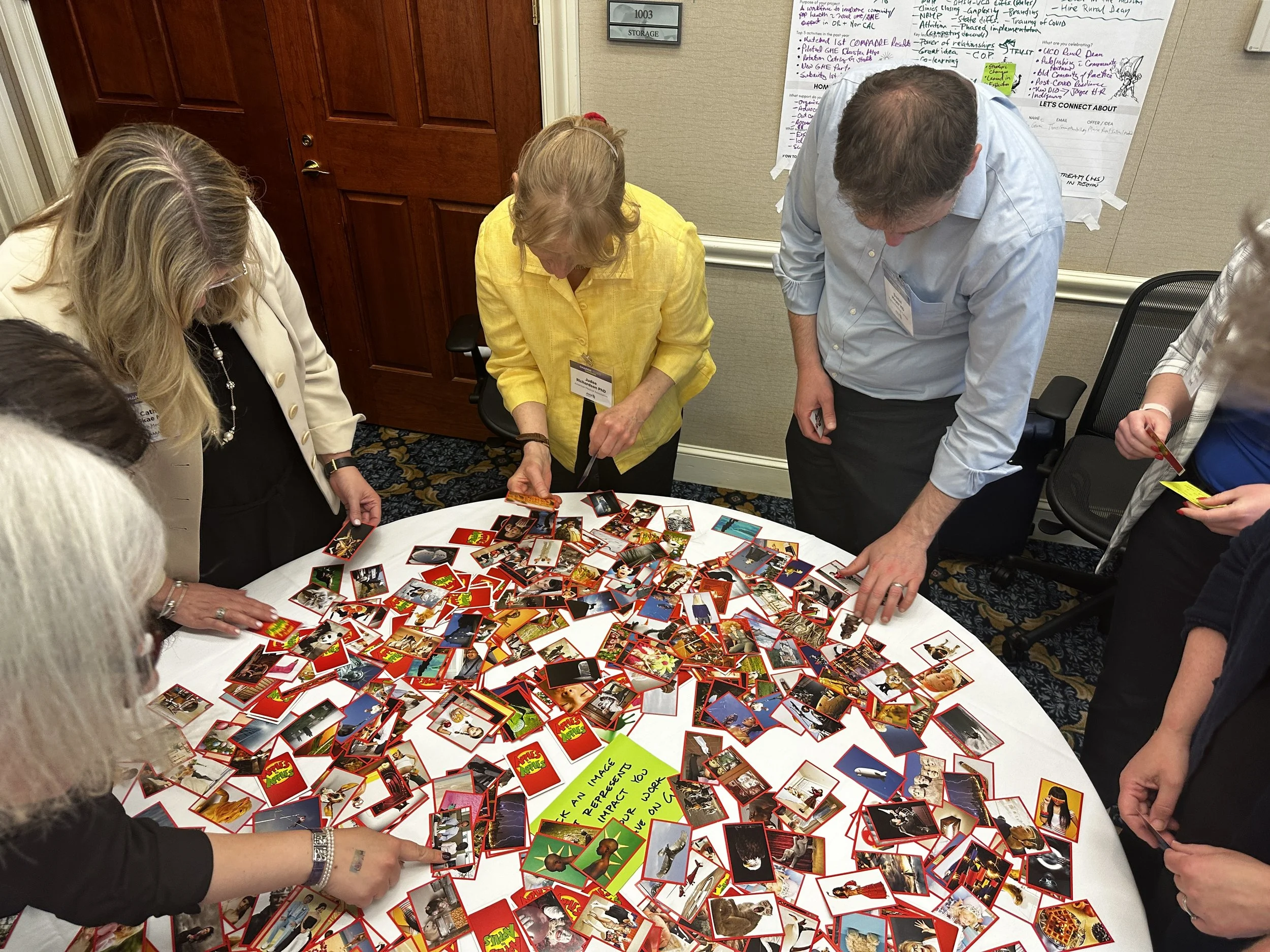
I worked with a group recently that had a hard time making decisions. Their culture tended to favor expertise over execution, discussion over decision-making. Their organizational structure had recently been flattened, leading to some big question marks around who was responsible for what, even for discrete tasks, not to mention initiatives that could affect the entire organization.
After one day of facilitated discussion, they’d shared a lot of interesting ideas and perspectives, but they’d made zero commitments or decisions.
The next day, I brought in a box of stickers to help.
My kids and I love collecting stickers from our travels. Plus, I support a lot of trade shows and expos, and I make a point to pick up vendor stickers. At this point, we have about three shoeboxes full of stickers of every shape, size, and subject.
I asked everyone to join me at a central table and dumped out the stickers. “I thought we should make things a little more colorful! These are for you. Go ahead and take some. You can take as many as you like.”
There was the expected hesitancy. Murmurs of “Is he serious?” and “What does this have to do with our meeting?” But then a few tentative hands reached out and took the really intricate stickers I’d picked up from a tattoo expo. Then a few more went for the ones from a space expo. Then the national parks. Pretty soon, there was a quiet raid on the table as participants scanned through the stickers to grab the ones they wanted ahead of their colleagues.
After the buzz had died down, I passed out some highlighters. “OK, you can keep the stickers. They’re yours. Now what I want from you is, the same way you grabbed stickers you liked, walk around the room and check out yesterday’s graphic charts, identifying any ideas you believe need to be acted upon. No one’s going to judge or second-guess you. I want to see where your energy is. Please take a walk!”
Once we had ideas highlighted, it wasn’t difficult to turn them into actions. Assigning actions WAS tricky, so I introduced the language of the “lead:” the person that is accountable with final authority, but not necessarily responsible for getting it done. With that language, we had a solid list of actions and people accountable for making them happen.
Why did this work?
The act of selecting stickers primed the participants into a mode of decision-making.
Priming is the phenomenon where exposure to a stimulus influences how you respond to a subsequent, related stimulus. If I ask you, “What color are clouds? What color is snow? What color is a marshmallow? What do cows drink?” your final answer will most likely be milk, even though cows mostly drink water. Why? You’ve been thinking about things colored white, and so you’ll naturally think of milk before you think of water.
When participants chose from among hundreds of stickers, they were priming their brains into scanning through options and making selections. It shifted them from the mode of inquiry, discussion, and debate into the mode of selection, decision, and advocacy.
Got a stuck group? Consider the behavior you want them to be in, and think of a way you can prime that behavior in a safe, low-stakes way. And if you’re interested in other ways you can use group dynamics to make the best decisions, let’s talk. https://calendly.com/brian-lizardbrain/45-min-discovery-call